
From 17th century Swedish theatre to WWII codebreaking: Spotlight on the FHF team’s own family histories
By Cosima Littlewood, Senior Researcher
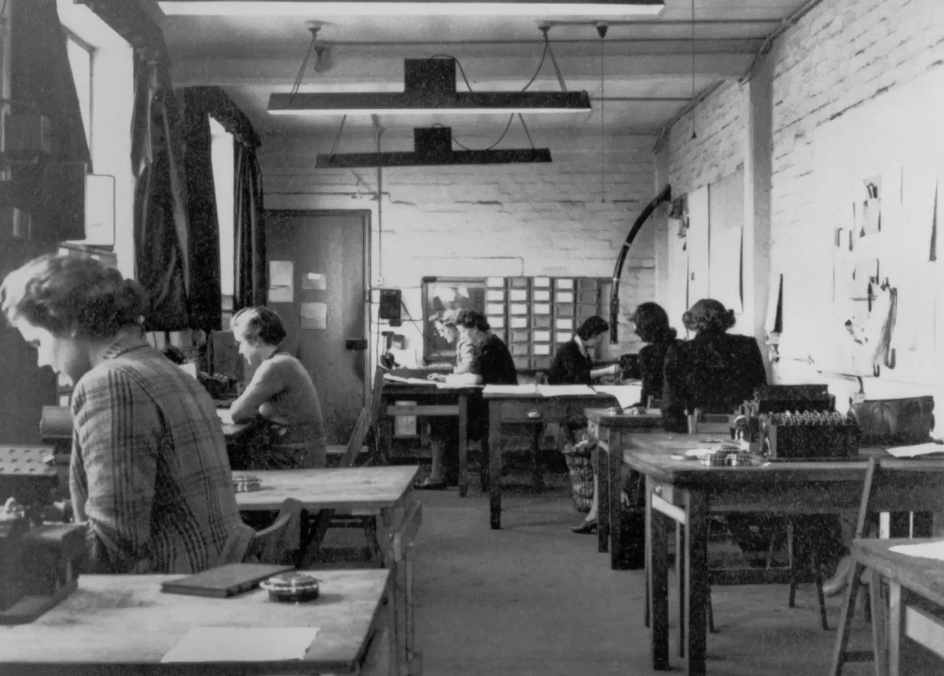
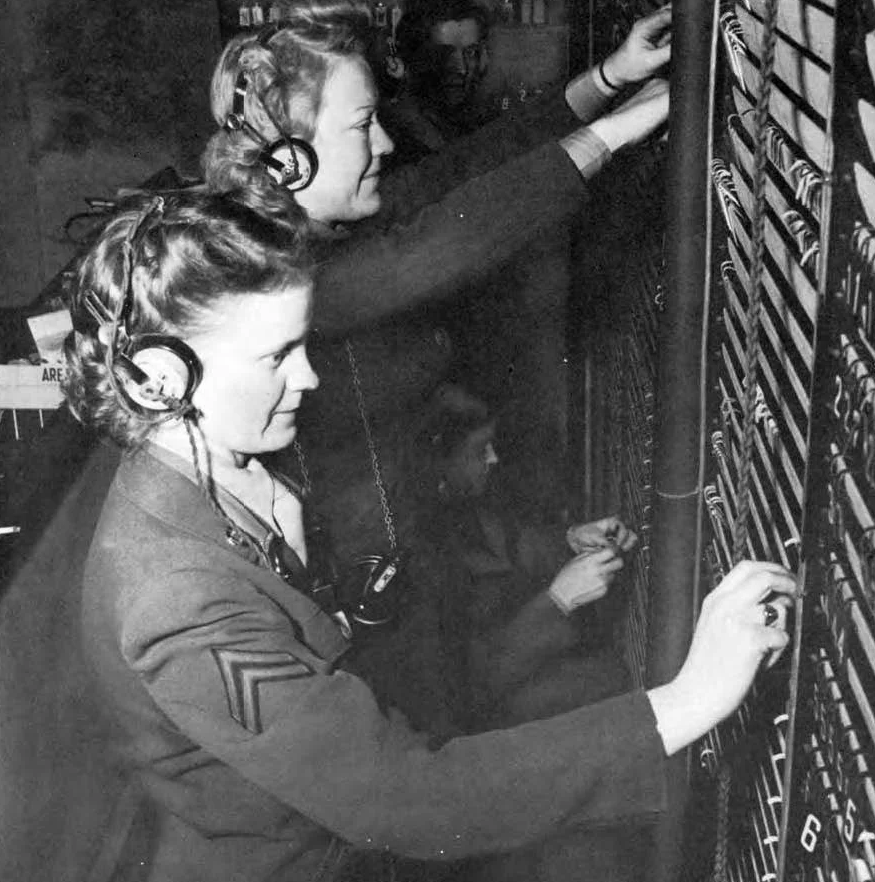
My family has always maintained that my great-aunt Nancy Littlewood was part of the top secret British codebreaking operation at Bletchley Park. Mathematician Alan Turing’s brilliant decrypting of German ciphers at Bletchley Park during the Second World War is now widely known, thanks in part to the 2014 box office hit The Imitation Game. However, WWII codebreaking was a mammoth effort involving hundreds of university graduates, including many women. As five years of research at Cambridge University recently uncovered, there were at least 77 alumnae of Cambridge’s Newnham College working at Bletchley Park:
“They worked day and night during the second world war, deciphering Nazi messages, breaking Enigma codes and analysing top-secret military documents. But until now it was not known just how many of the intrepid female codebreakers who worked at Bletchley Park had studied at the same place.”
— The Guardian (2024)
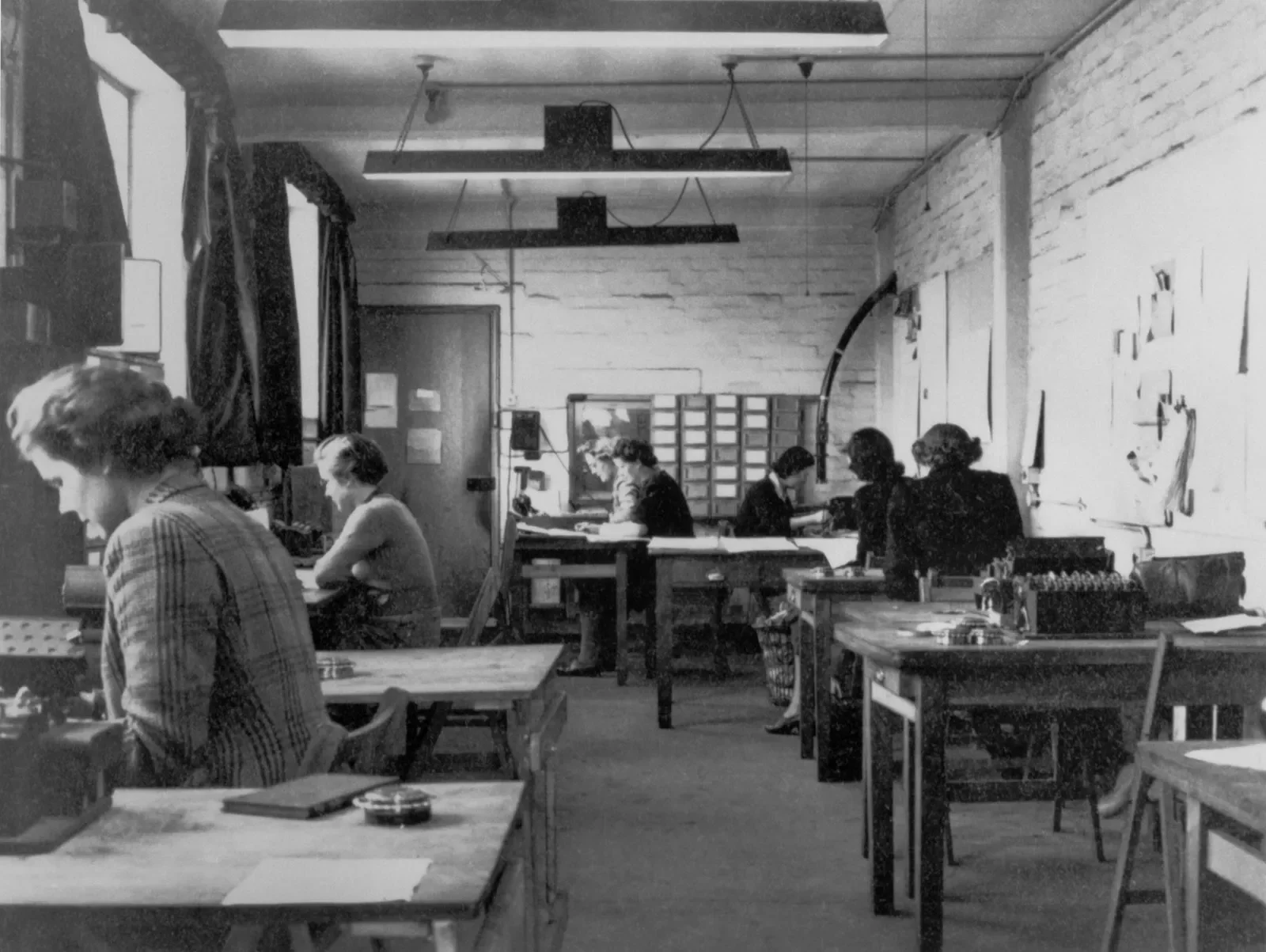
Women at work at Bletchley Park (1943)
Additional research has shed light on the participation of women from Oxford University, my great-aunt’s alma mater. Despite the declassification of many World War II records in recent years, the names of those involved in covert operations remained in the dark.
“Many of those honoured for the first time by their alma mater carried the secrets of their war work to their graves. Whenever one of the graduates, Jane Monroe – a mathematician who worked in cryptanalysis in Hut 6 at Bletchley Park, deciphering the coded messages sent on German Enigma machines around the clock – was asked what she did during the war, she would always say: “Oh, I made the tea.””
— The Guardian (2024)
The operatives’ secrecy was enforced by the Officials Secrets Act. My great-aunt Nancy died in Cheltenham in 1964, aged 42, long before she could share the details of her wartime contributions. Like Cambridge’s Jane Monroe, it has finally been confirmed that Nancy was part of the “Hut 6” section that was tasked with breaking the German army and air force Enigma ciphers. To date, she is one of the 36 known alumnae from St. Hugh’s College who served at Bletchley Park. My family is proud to see her now featured in the Bletchley Park Roll of Honour.
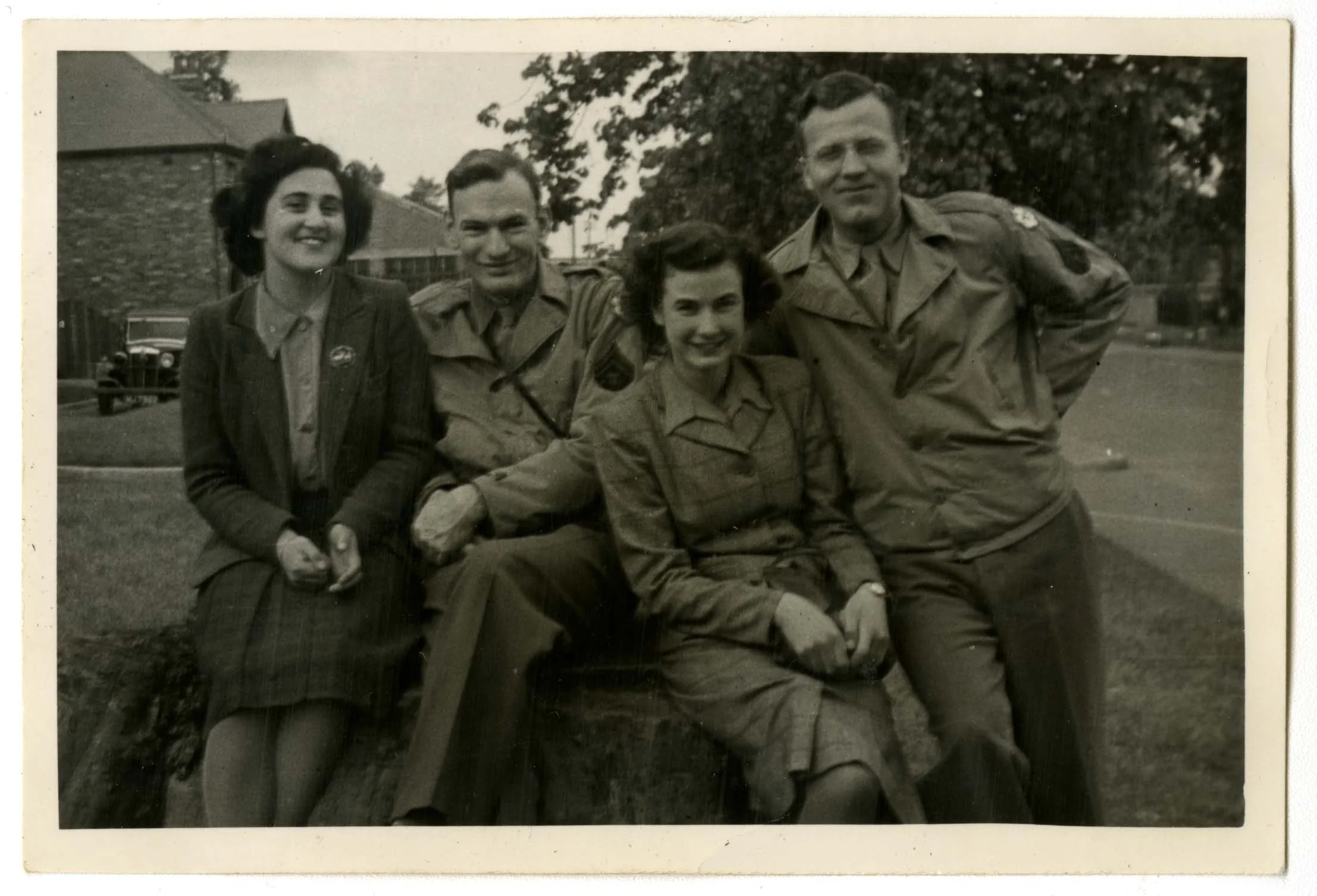
Nancy, far left, with colleagues at Bletchley Park
At Family History Films, finding documents that prove family lore is one of the most rewarding parts of our work. As a company, we share a passion for history and documentary filmmaking, and bringing our clients’ family histories to life has allowed us to reflect more deeply on our own.
Nico Docherty, Project Manager, has witnessed during FHF shoots how delighted our clients’ extended family members are to have the opportunity to talk about their own lives and share their knowledge of the family’s ancestry. Nico was inspired to replicate the experience with his family.
“Taking the time to sit down with my grandparents and learn more about their early lives is something I had so rarely taken the time to do. My grandparents aren’t particularly reticent but they (like most people) won’t share biographical details unless prompted to do so.”
— Nico Docherty, FHF
Nico’s maternal great-grandparents were all refugees that relocated from Turkey to Greece during the population exchange of the early 1920s. Following a treaty between the two nations, Greek Orthodox Christians were forcibly displaced from Turkey and Muslims from Greece.
“I often think about them and what that experience would have been like, and the doggedness you would need to get through such an experience.”
— Nico Docherty, FHF
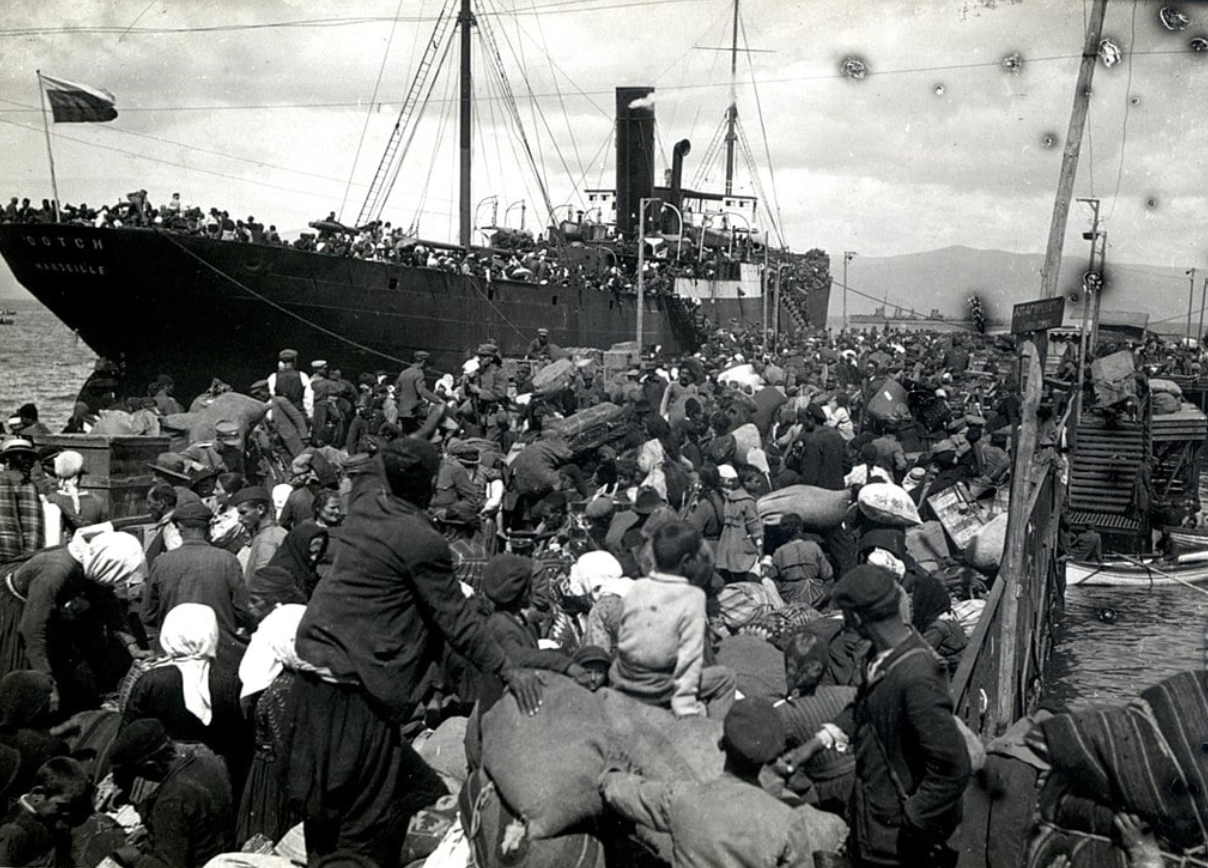
Greek refugees at the Port of Mudanya, Turkey (1922)
Tales of migration loom large in family history. Jessica Larché, Head of Production, marvels at her paternal grandmother’s journey from Ireland to London in her late teens.
“Her story makes me particularly proud. She and her sisters were born in rural Ireland and raised on a farm with very little. As the sisters grew older, they decided to migrate one by one to London and establish their own lives. Once each sister found work and lodgings, they would bring over their younger sister to do the same, until the entire family had resettled. They went on to open a series of nurseries and eventually a school, all of which continue to thrive today.”
— Jessica Larché, FHF
Jessica recently obtained Irish citizenship.
“It makes me feel even closer to my grandmother, and it made her very proud. This summer we'll be visiting Ireland together with all of her children and grandchildren - it'll be a dream come true for her to see the family she's built back in her home country.”
— Jessica Larché, FHF
While Jessica oversees filming for our family history projects in the U.S. and countries around the world (South Africa, Hong Kong and Italy to name a few), she has also sharpened her own research skills.
“My stepmother's grandparents left Romania during its Soviet occupation and travelled by foot to France. After joining FHF, I began building my own family tree and was able to find documents relating to my stepmother's grandparents, including images of them which she had never seen before.”
— Jessica Larché, FHF
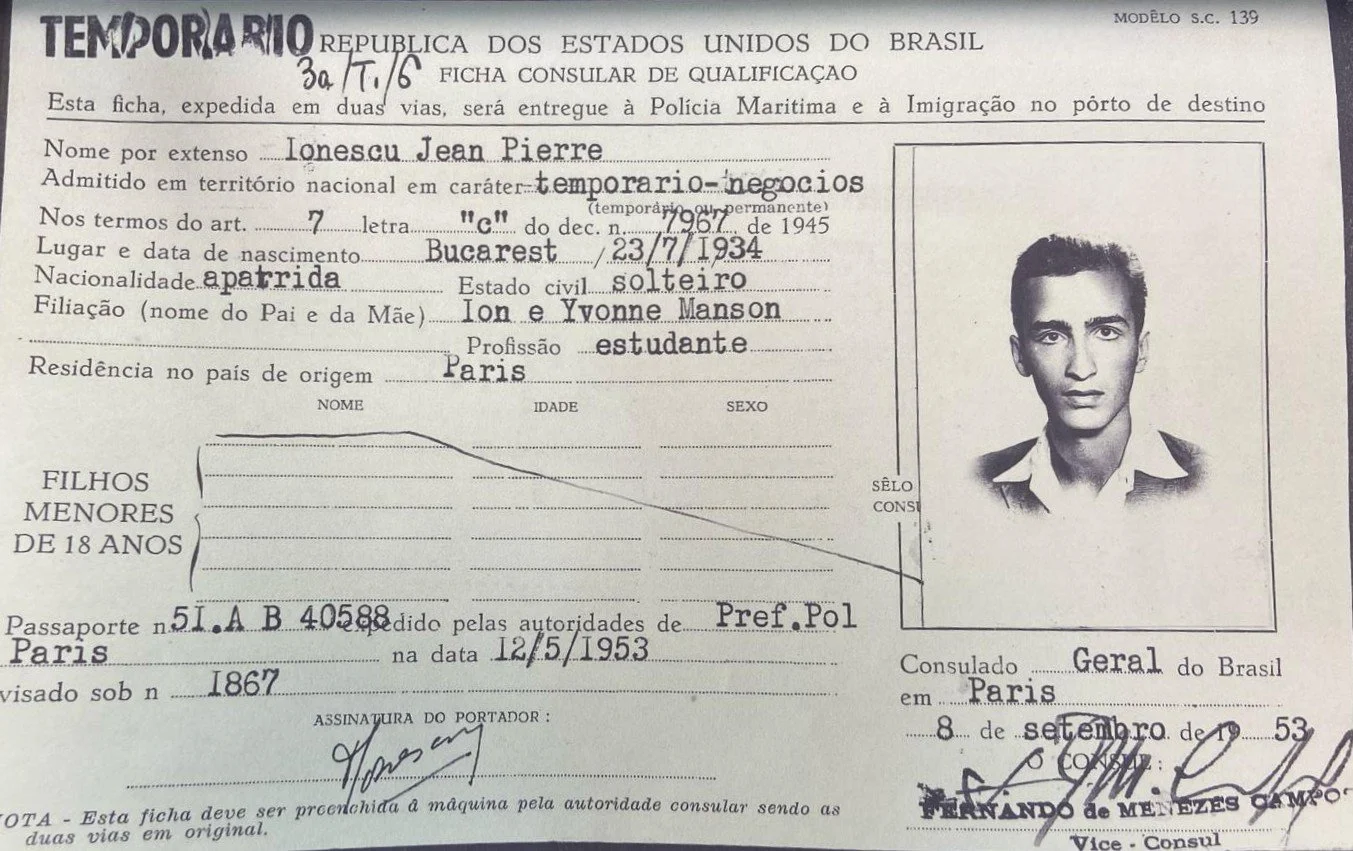
One of the records found by Jessica of her stepmother’s grandparents
FHF Researcher Ellen Taylor and her mother’s family have done extensive genealogical research on their Swedish forebears. Among their notable ancestors is Ellen’s 10-times great-grandfather Christian Thum (d. 1655), one of the first known actors in Sweden who started what was likely the first theatre in Scandinavia. Ellen has also learnt that her seven-times great-grandfather was Captain Gustav Larsson Bucht (1696-1759), a significant figure in the military and social history of Sweden and the Great Northern War against Russia. This past year, Ellen conducted interviews with her British paternal grandparents.
“I consider myself fortunate to have heard first-hand accounts of the Second World War. My grandmother did not meet her father until she was four years old because he was serving in the Royal Air Force. She recalls her own grandmother — my great-great-grandmother — providing food to German prisoners of war who worked in a field near her house. When neighbours criticised this, my great-great-grandmother responded, “I’d like to think if my son was a prisoner in Germany, a German mother would look after him”. The prisoners crafted wooden toys for my grandmother to play with.”
— Ellen Taylor, FHF
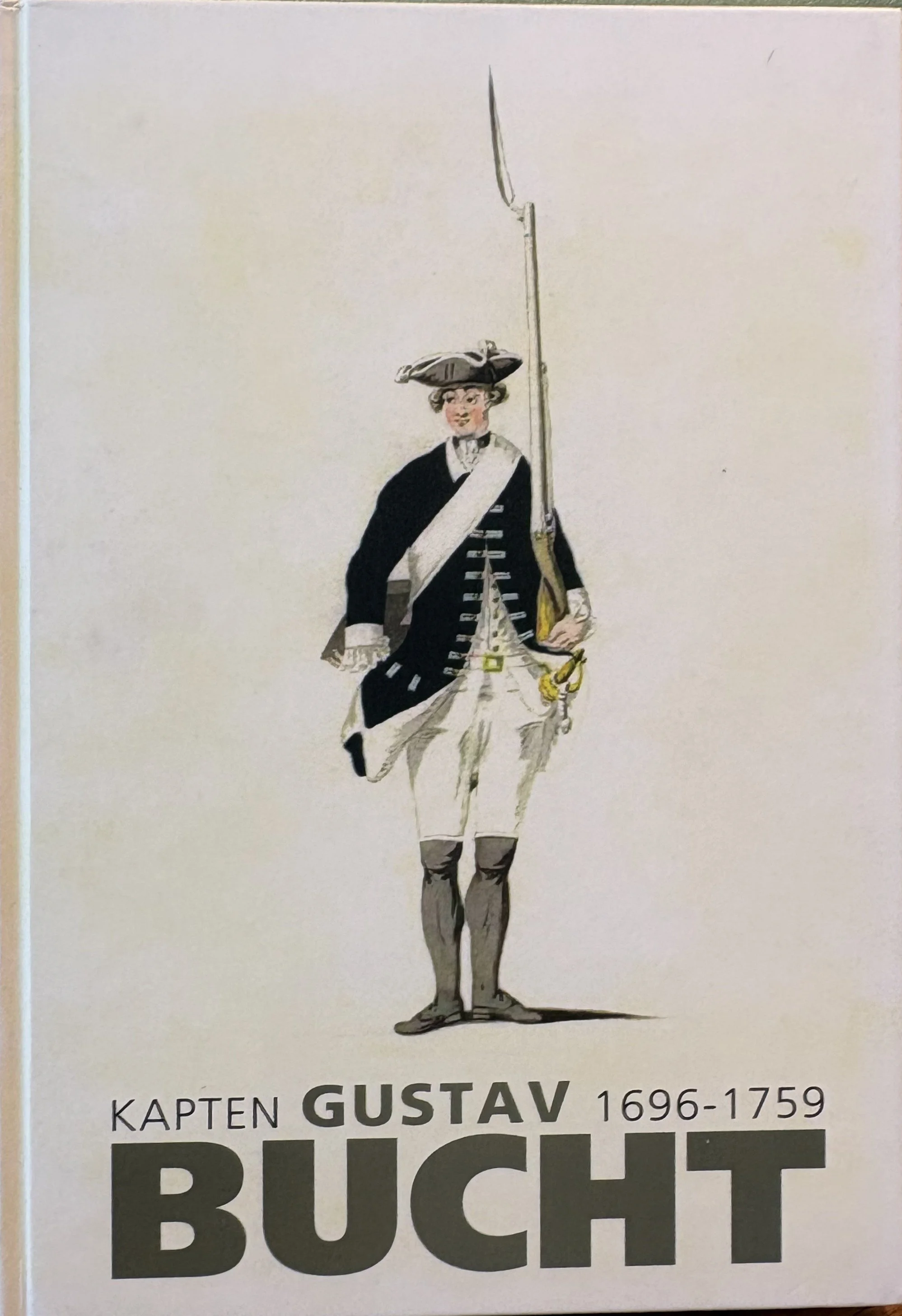
A book about Ellen’s ancestor by Erkki Hasa (2010)
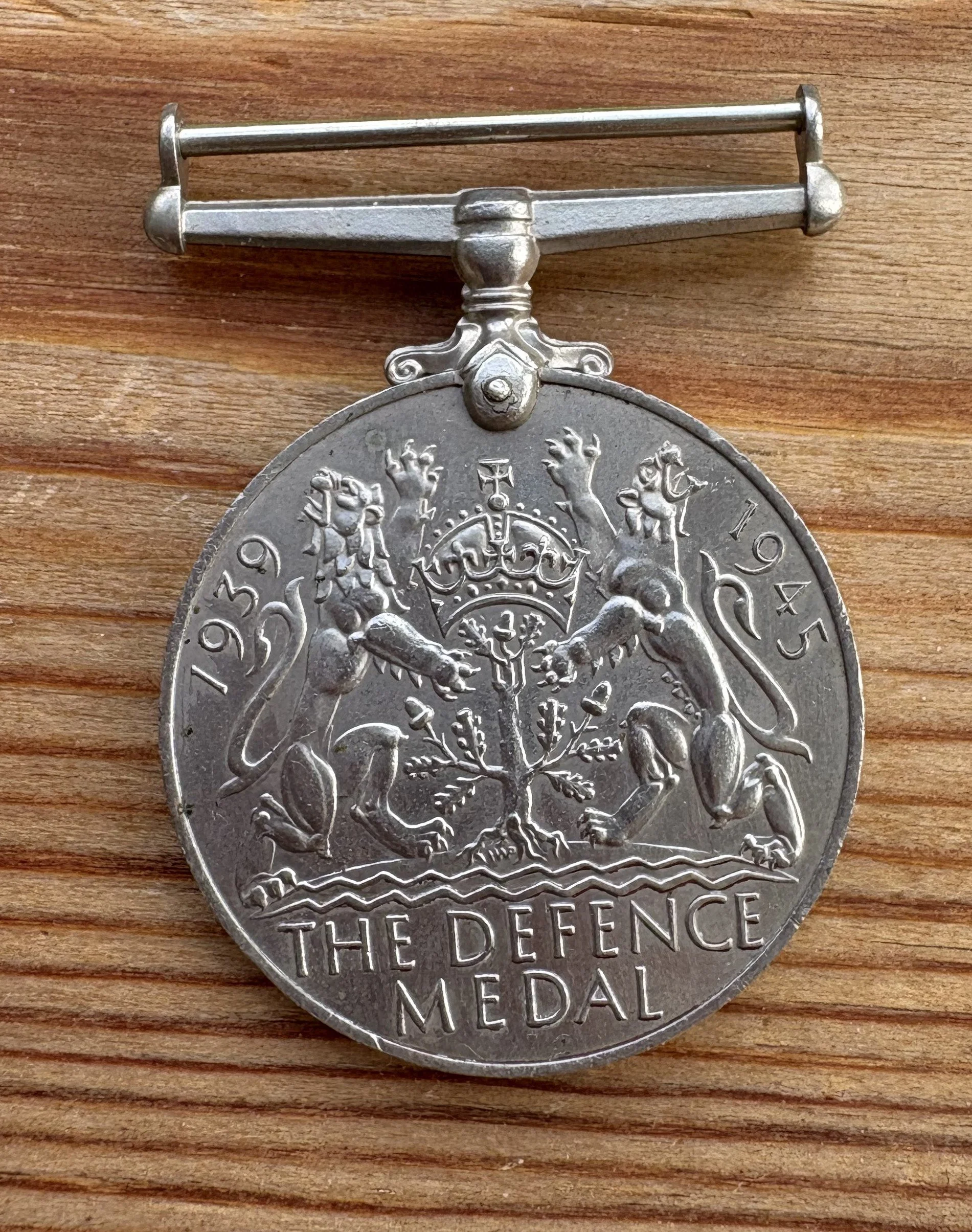
Ellen’s great-grandfather's Second World War medal
George Lewis, Production Assistant, was told similarly colourful wartime stories by his grandparents.
“My maternal grandfather George, who I was named after, was a child in London when WWII began. He told me how through his seven-year-old eyes, not fully comprehending the situation, he had quite enjoyed living through The Blitz. He would rush out into Hammersmith [West London] with his school friends to play in the rubble and see if they could find pieces of shrapnel, before being chased away by the air raid patrol teams and firefighters. He said that he had little idea of the danger and general worry about the war.”
– George Lewis, FHF
In 1944, a few years after the German air raids on London, George’s maternal grandmother Ann, aged 14, had an unforgettable experience while hiking in South Devon with friends.
“She came across a huge American military presence on the beach at Slapton Sands. Marquees had been erected and were filled with trestle tables overloaded with food, melting away in the hot tents. She recalled how she and her friends were invited by the friendly soldiers to eat some of the food. She realised much later what they had stumbled upon was a top secret rehearsal for Operation Overlord, later known as D-Day.”
– George Lewis, FHF
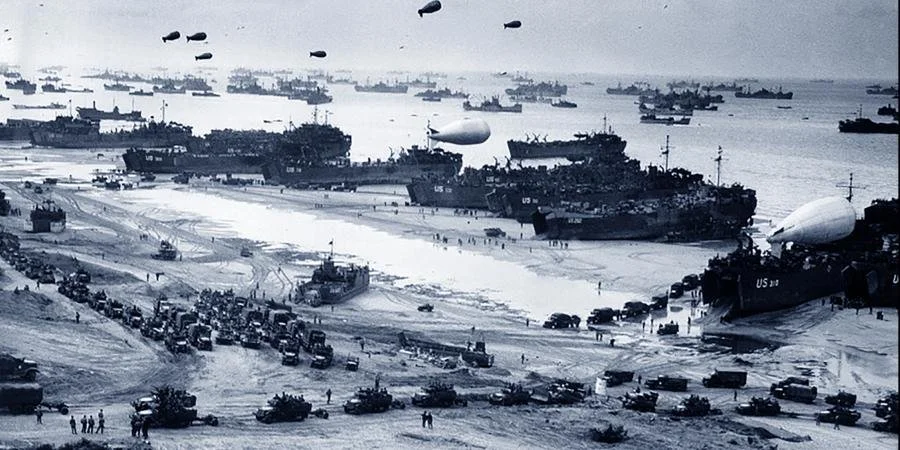
Exercise Tiger at Slapton Sands (1944)
George has realised how much he took access to these recollections for granted.
“When I saw the impact of our projects on the lives of our clients, it inspired me to reflect on my own ancestry.”
– George Lewis, FHF
Since joining FHF five years ago and diving into the incredible stories in our clients’ family trees, Project Manager Matilda Strachan has been gradually building her own tree in her spare time.
“I’ve always been told by my parents that we're Scottish through-and-through, and while I found that to be largely true, I discovered that my father’s maternal family were from Wolverhampton [in central England] and worked across the generations in its staple brass industry, as well as at a 'Japanning' factory.”
— Matilda Strachan, FHF
As Matilda subsequently learned, ‘Japanning’ was a term coined in the 17th century to denote an East Asian-inspired lacquering technique used on pottery and furniture in Europe.
“One of the more exciting discoveries in my family's own collection of documents was a letter by my great-great-grandmother claiming that we are descendants of both Robert Burns and Flora MacDonald. To be related to the most Scottish of Scots would be amazing but my extensive digging has yet to prove this true.”
— Matilda Strachan, FHF
Another prized find is an original tintype photograph of Matilda’s three-times great-grandfather William Greig Strachan, who was born in Glenbervie, Aberdeenshire around 10 miles away from the Scottish village of Strachan itself.
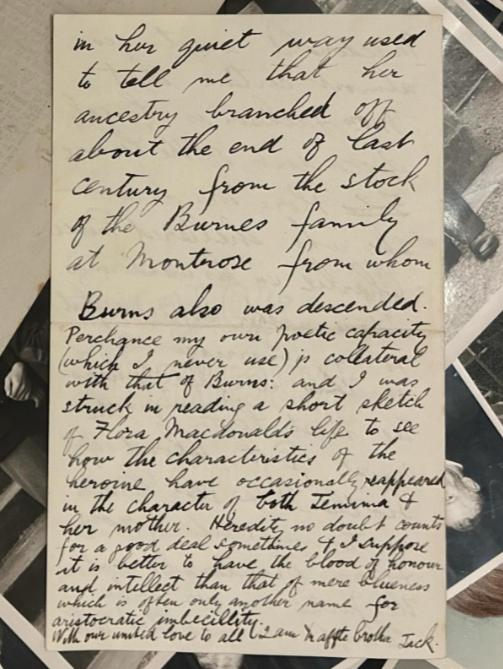
The letter penned by Matilda’s great-great-grandmother mentioning their Burns connection
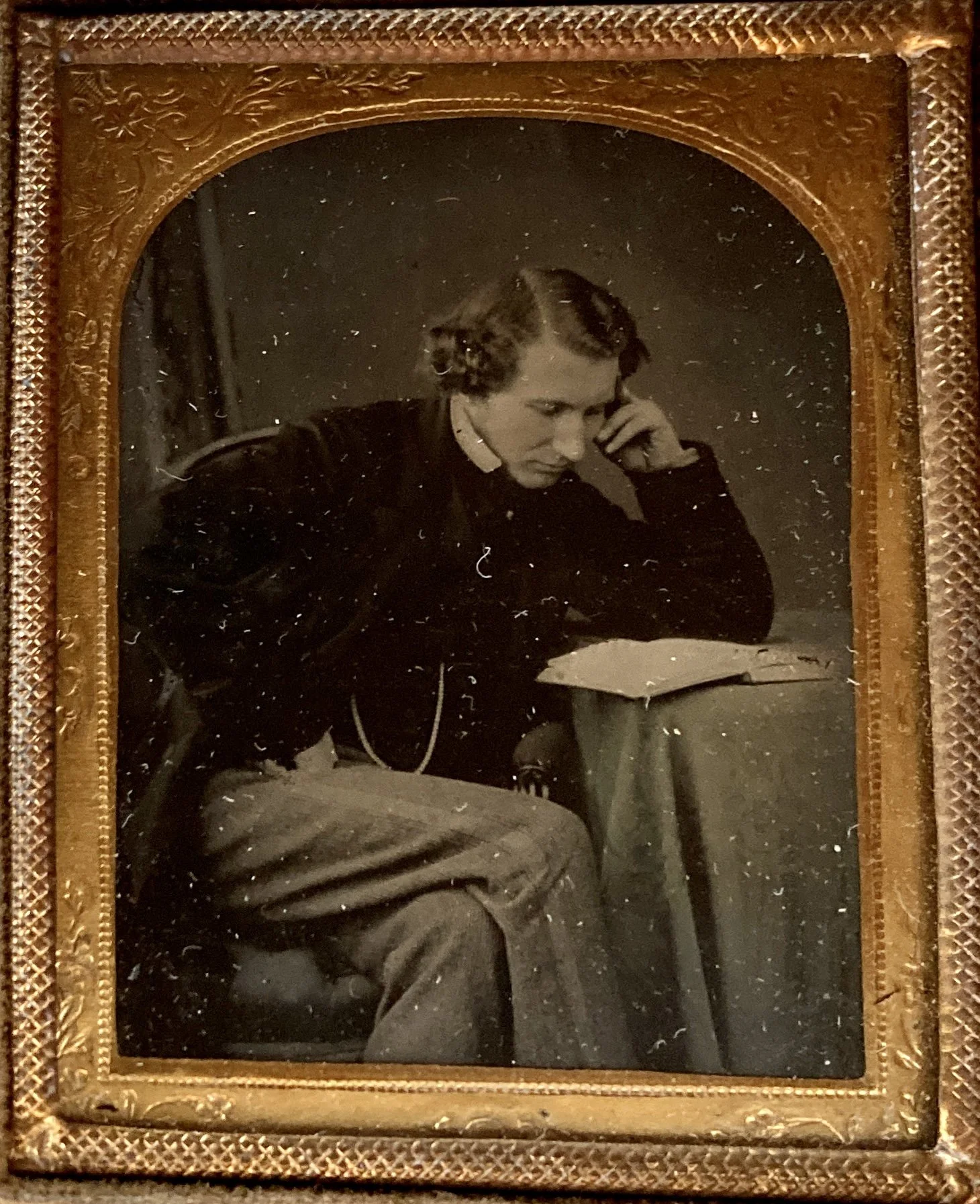
William Greig Strachan
“Since working at FHF I've interviewed my oldest living family members to capture their stories, digitised my own family's home movies from the 2000s and made family trees as gifts for family members. Spending time with my extended family now I'm always sure to ask questions and also let people know what I've found.”
— Matilda Strachan, FHF
“In this brave new digital world, authenticity can be elusive. Access to physical records and personal recollections provides a physical anchor to the past that cannot be replicated.”
— Ellen Taylor, FHF
“Working at FHF has taught me the importance of capturing and preserving your family's stories while you still can. In day to day life it's easy to focus on the present — people often question the past only when it's too late.”
— Jessica Larché, FHF
“FHF has made me realise that every family's story is interesting. There is no such thing as a boring ancestral story. Our ancestors strove and overcame and enjoyed life in all manner of fascinating ways.”
— Nico Docherty, FHF





How reliving the past can preserve it for the future.